Good Crew Have Options. Here’s Why They Pick Up My Calls.
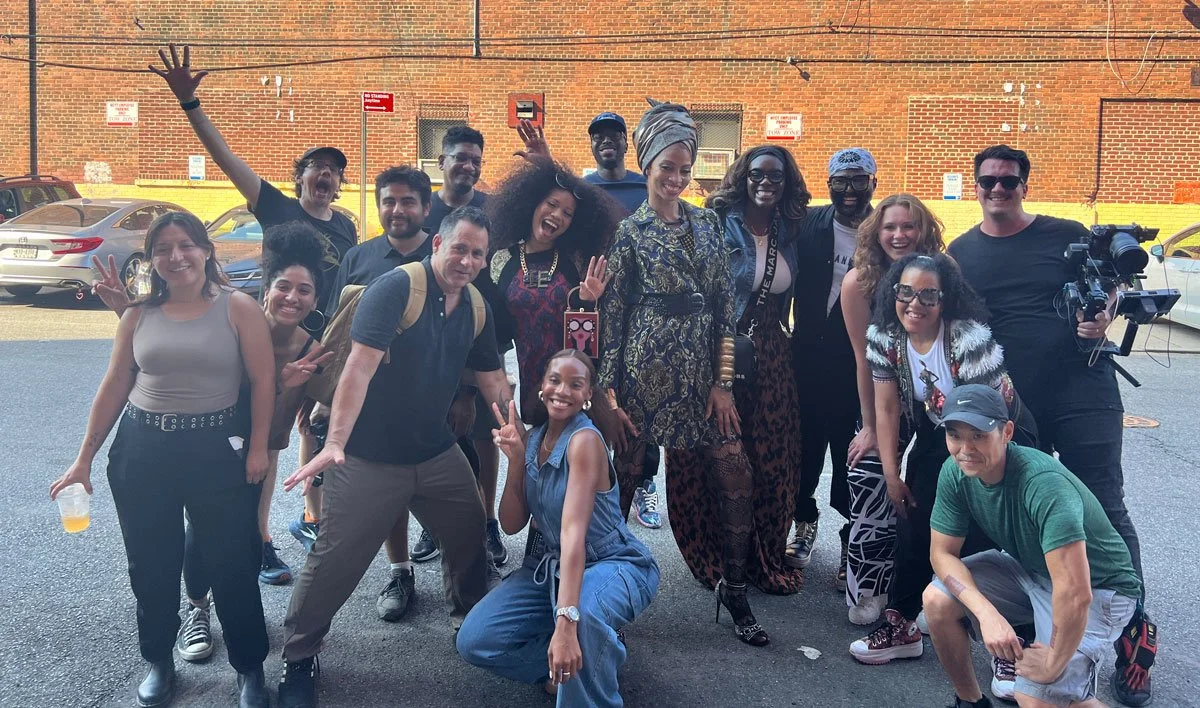
What years of crew relationships make possible when I’m building the team behind your video.
Over the 25+ years I’ve been in the industry, I’ve invested over $100K in equipment. Even though all of that kit shows up on my company’s balance sheet, none of that stuff represents my greatest asset.
My most valuable asset is my network of collaborators. And it’s not even a close call.
Second would be knowing how to expand that network with appropriate outreach that gets a response, and then cultivating the relationship with the kind of goodwill that compounds over time (hint: don’t skimp on lunch). My network is now national, and I know how to stand up teams anywhere. Just give me enough lead time to do it right ~ )
What earns a specialist crew’s yes
These are people who work on national campaigns. They don’t show up in a stack of resumes because they’re busy capturing lightning in a bottle on set and networking by word of mouth.
They know their value.
They are in demand.
They choose jobs based on the 3 R’s → The rate, reel, and relationship. They aim to tick all three when saying yes to a day of work.
Bottom line: They want to work with producers who respect the craft of production. Where game gets game, they’re properly classified as W-2 workers and protected by workers’ compensation if they get injured. They’re paid on time (not NET 30+), and treated like human beings.
Matching the team to the project
My bench spans rising early-career folks, mid-career pros who are starting to specialize, and seasoned leads. With this diversity I can match talent to project scope while keeping mentorship in the mix, and meeting the nuanced needs of the client and subject matter.
Whenever possible, I try to hire department leads who know each other. The best crew share a trust that’s earned. They run through brick walls for each other. At its peak, they dance through the complicated logistics of a shooting day with efficiency and grace. I’ve learned to leverage this chemistry to not only to make the day on time and under budget, but to create a calm, supportive set where on-camera subjects feel safe enough to be authentic.
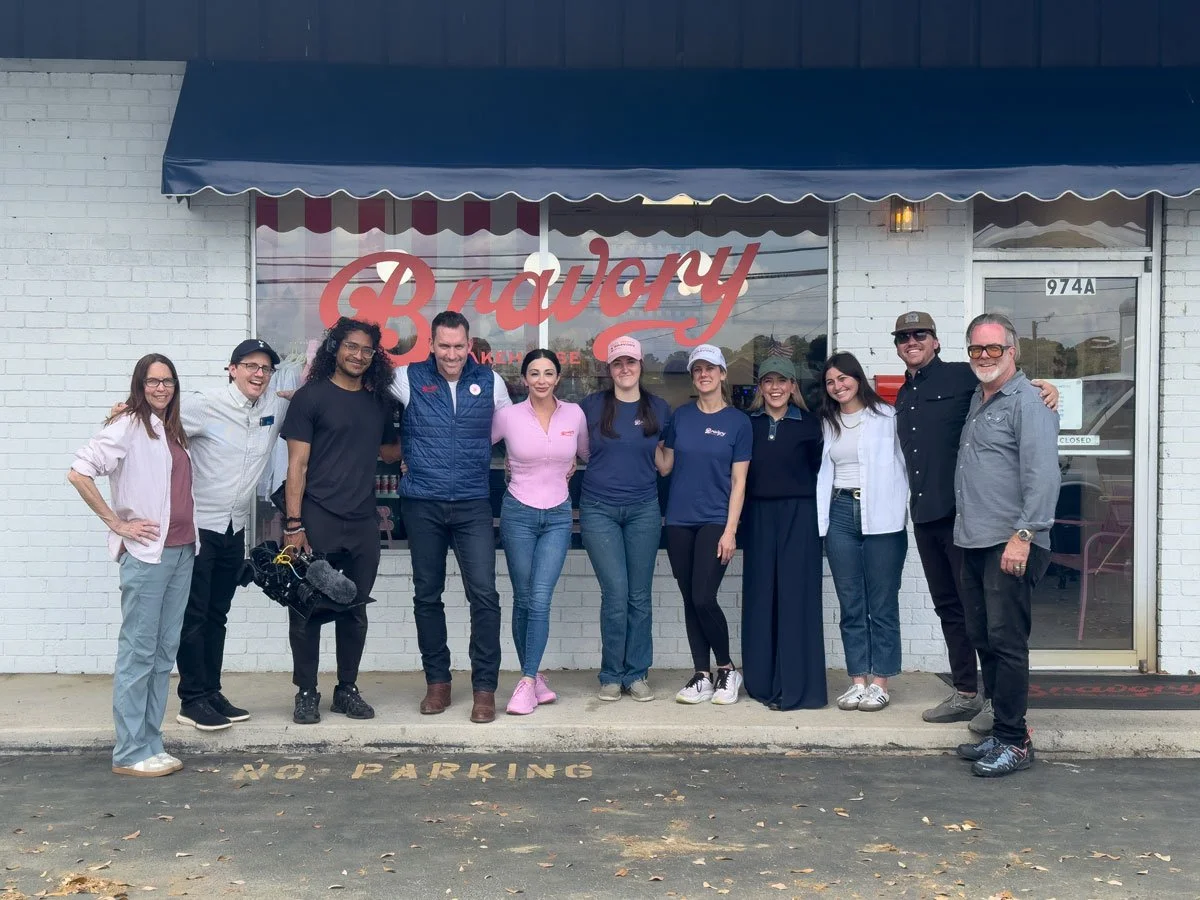
Happy cast and crew in North Carolina.
On a recent project where I traveled with the client and DP to a remote shoot in North Carolina, I hired everyone else locally. I strategically mixed folks in the first 5-10 years of their career with a seasoned sound mixer with 30+ years under their belt (shout out Geoff Gann). With enough phone convos and prompt email follow-ups, Geoff and I were on the same page before meeting face to face at 6 AM on the shooting day.
In the late morning, when there was a question about when to break for lunch, I strategized with Geoff on what made the most sense given all the variables. At that point, I asked if he would step in as the de facto shop steward, to get crew buy-in before locking in the plan. In about 90 seconds, everyone was on board and focused on the next setup, knowing they’d be breaking for lunch soon after.
Trust starts before the shooting day
My crew pick up the phone when I call because I establish a relational approach from first point of contact to the moment I shout them out on socials when a project is finally let out into the world. I open the door to a collaboration correctly — clarifying who I am, and how I prioritize ethics in my business. One crew member in North Carolina mentioned how my use of Wrapbook, a well-known digital-first production payroll provider, was a green flag when evaluating the trustworthiness of an out-of-town producer.
On shoot day, when I greeted each of them for the first time, I put their custom coffee order (requested via spreadsheet the day before) in their hands only after labeling the cup myself with a Sharpie.
When a stranger asks you to show up for a 6 AM call time, these nuanced details don’t just make folks feel seen.
Together they leave the best possible impression, and over the course of my career it continues to get easier to solve nuanced creative/technical challenges for my clients. Doing that while working with friends IS the reason why I love this business.
What this makes possible for clients
When I retained a proper entertainment law firm (s/o RAMO) to write my contracts, I was struck by how their standard production service agreement (PSA) treats this network as a trade secret.
This contracted line item confirmed what I already felt in my gut. That the real value I bring to clients isn’t simply production services, it’s what that means in practice:
Access to a trusted network of collaborators you build through word of mouth and good faith over decades.
Ethical hiring practices including payroll built for the nuances of production crew where workers’ compensation and overtime are included as the baseline (not a nice to have).
Asking the right questions of department leads to put the right tools at their disposal to work efficiently and with relative ease.
Expanding the capacity of client-side teams by taking on the technical and logistical heavy lifting, so they can focus on organizational strategy rather than managing freelance crew spreadsheets.